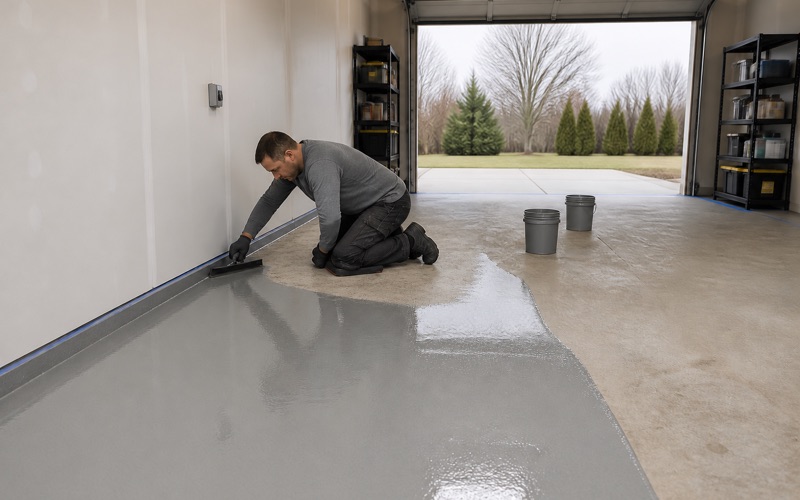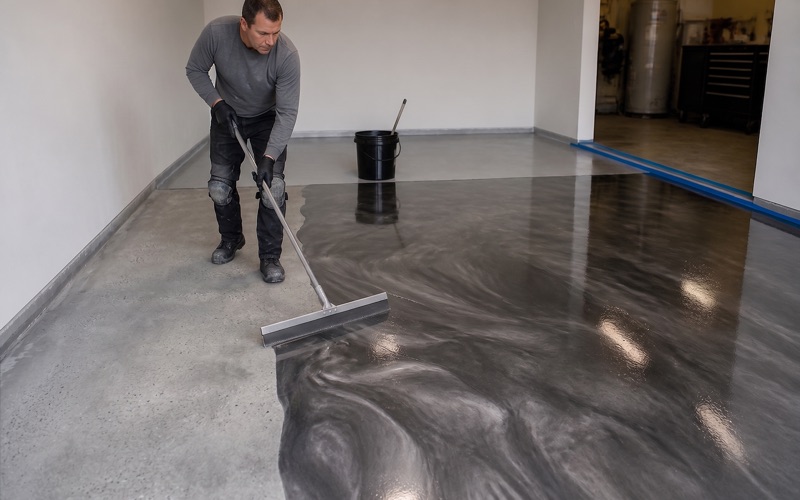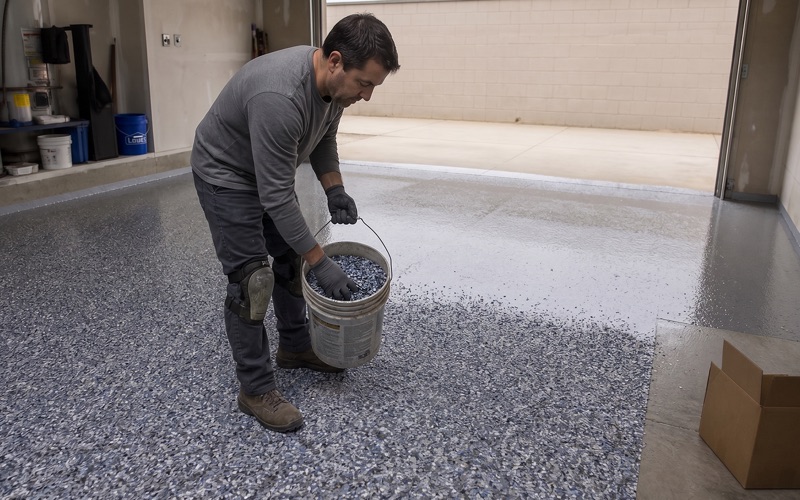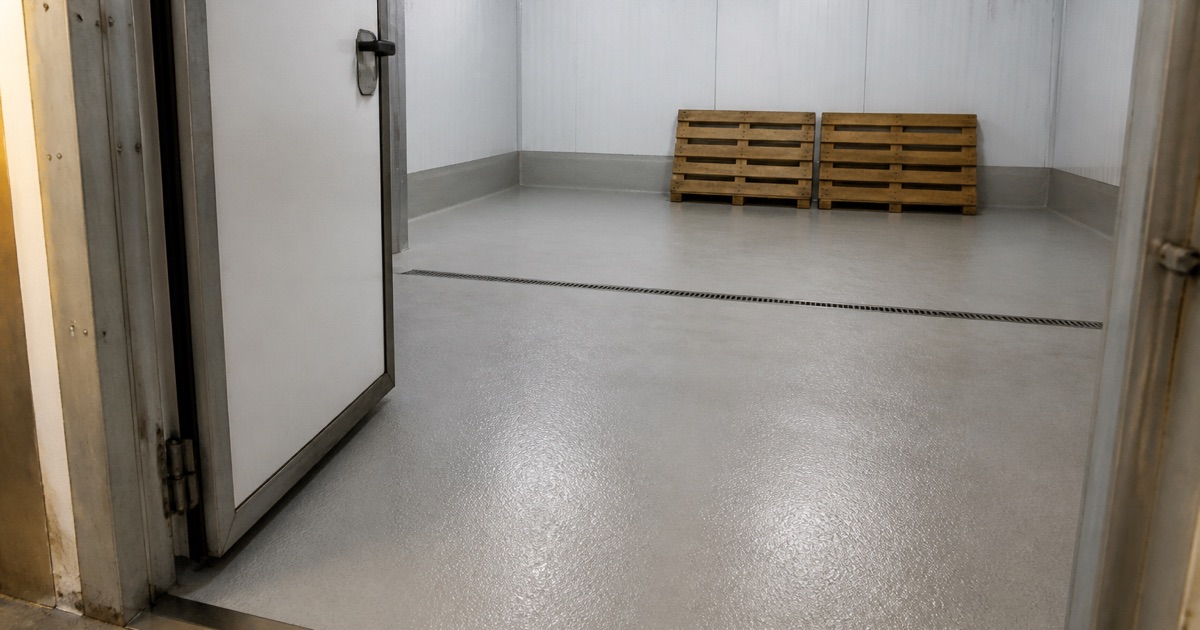
These are three different products with three different jobs. A flake floor broadcasts vinyl chips into a wet body coat for a durable, forgiving, slightly textured surface that hides dust and tire marks, while a metallic pour is a decorative effect built by moving pigment through clear resin. A solid color is plainest and cheapest, and it shows every mark. Most Colton garages end up on flake for good reasons.
Full Broadcast Against a Light Scatter
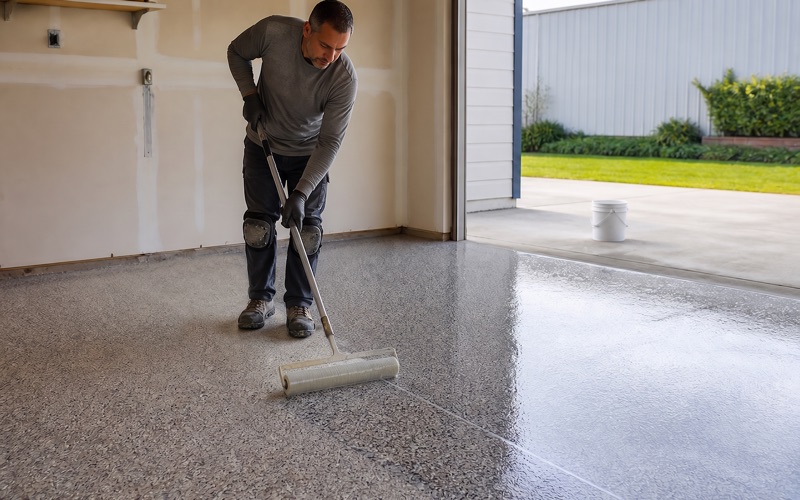
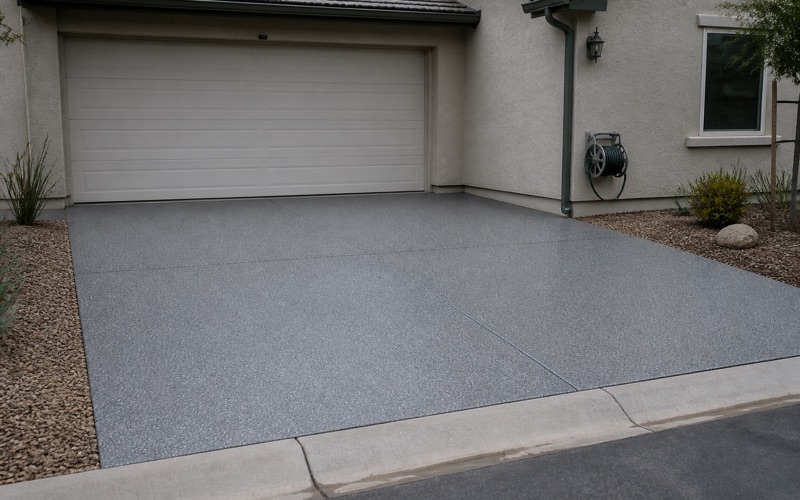
Flake density changes a floor more than color does. A full broadcast throws chip to refusal until no resin shows, then scrapes and topcoats, giving an even, heavily textured, seamless-looking surface. A light scatter leaves base color visible between chips and reads speckled rather than solid. The full broadcast costs more in material and labor, and it is the one that hides a repaired slab.
Picking a Flake Blend by Name
Flake blends are sold under proper names rather than descriptions, and those names carry real weight when you compare quotes. Two contractors quoting a gray flake floor may be quoting different blends at different chip sizes and different broadcast rates. We put the blend name, the chip size and the broadcast rate in pounds per square foot into the written scope, so you are comparing the same floors.
A metallic floor is made by dispersing pigment through a clear resin and then moving it — rolled, brushed or blown — so the pigment separates and settles into a marbled depth. The pattern is therefore directed rather than controlled, and no two pours are identical. We show worked examples and describe the effect honestly, because anyone expecting a repeatable pattern from a metallic pour will be disappointed.
Quartz Broadcast Where Slip Resistance Rules
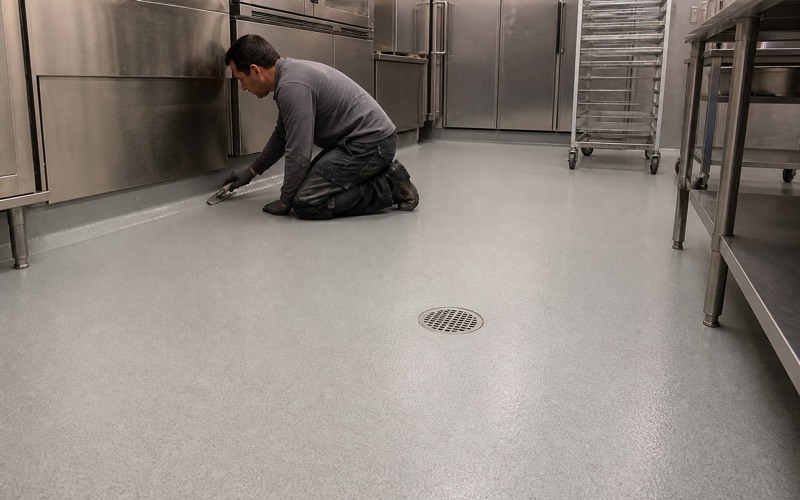
Where a wet floor is normal and the surface has to be safe rather than pretty, quartz broadcast beats vinyl flake. Colored quartz aggregate is larger and harder, builds a thicker system, and gives a measurable texture that a DCOF slip resistance figure can be quoted against. That is why it appears in commercial kitchens, wash-down areas and locker rooms rather than in a decorative garage.
Gloss, Satin and Matte in a Working Garage
Sheen is a practical decision more than an aesthetic one. High gloss looks best on the day and afterwards shows dust, tire marks and every scratch. Satin gives up some depth and hides a great deal, while matte hides the most and reads flattest. In a garage actually used for storage and vehicles, satin is usually the finish people are happiest with a year later.
Polished Concrete Instead of a Coating
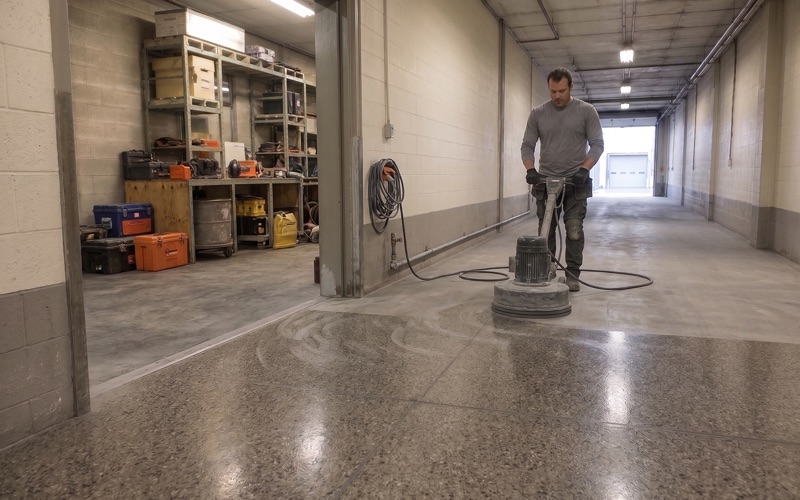
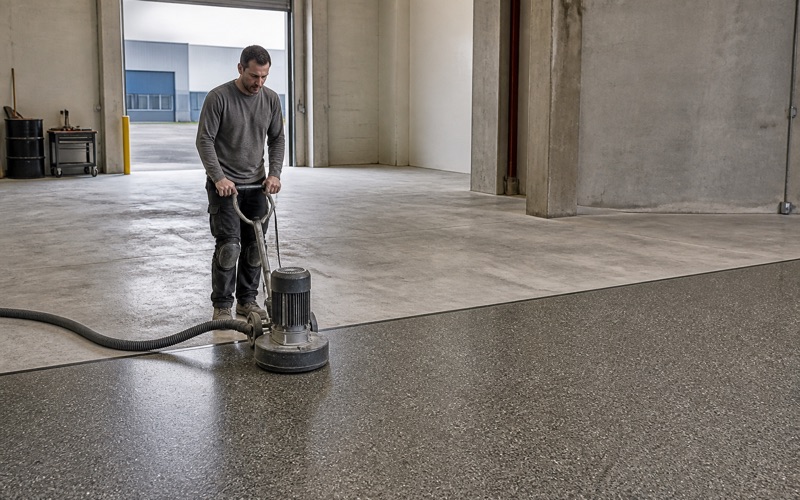
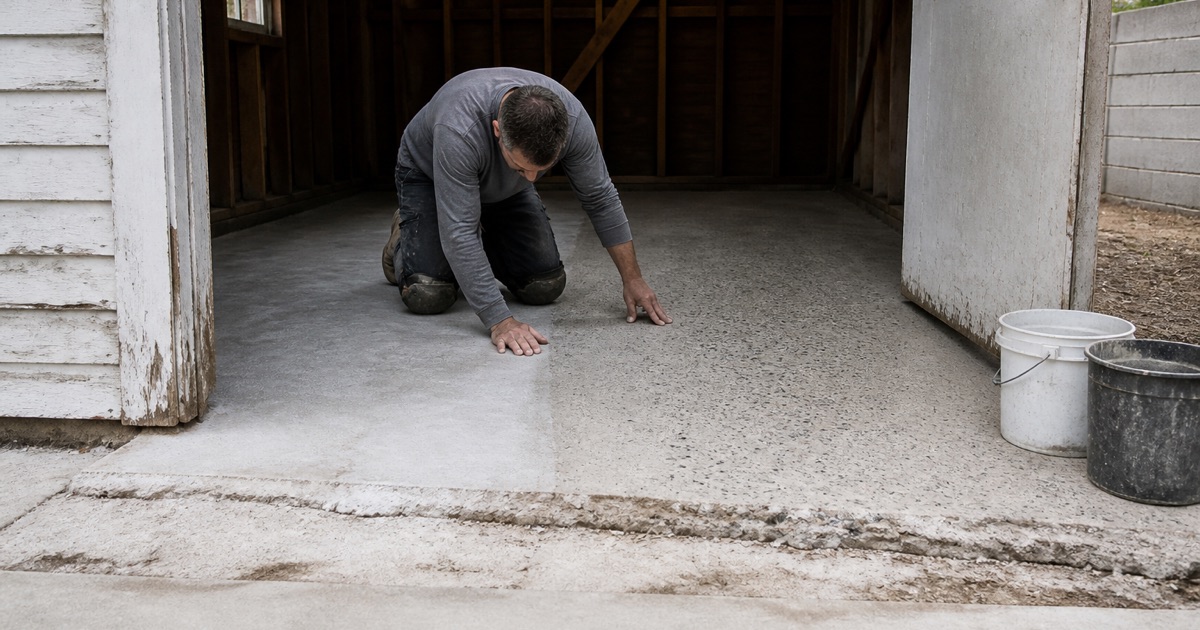
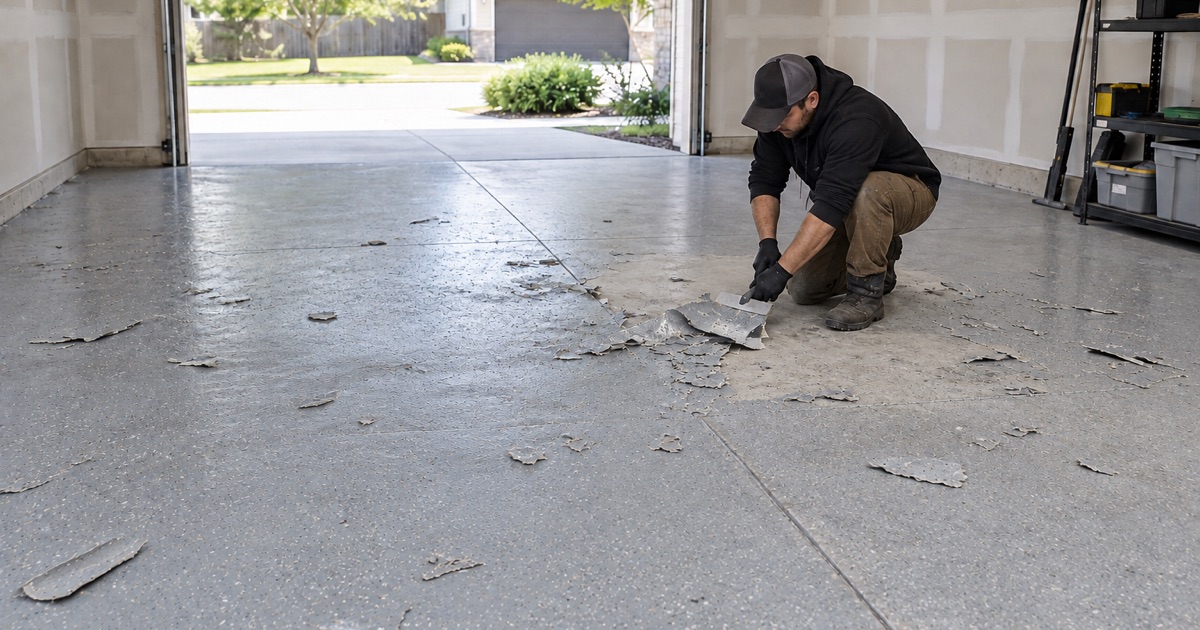
Polished concrete is not a coating at all: the slab is ground through progressive grits, densified with a chemical hardener and polished to a chosen gloss level, so the finished floor is the concrete itself. It cannot delaminate, because nothing is bonded on top to let go. It also cannot hide a poor slab, which is why the assessment comes first.
Pool Decks, Patios and Driveways
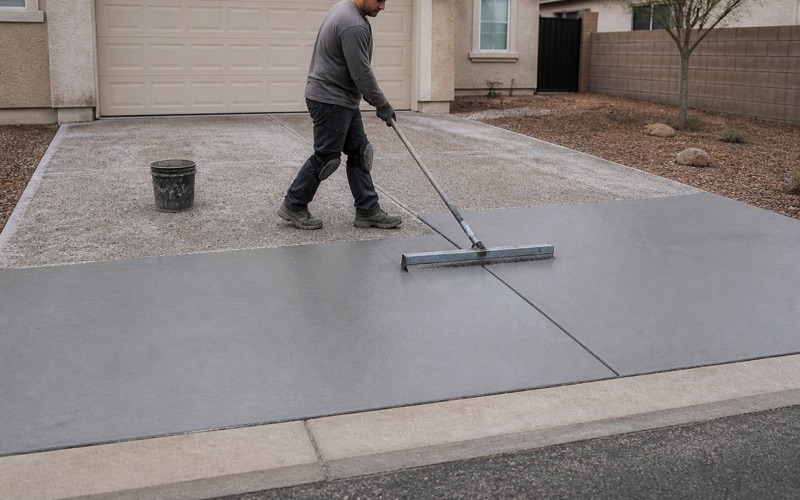
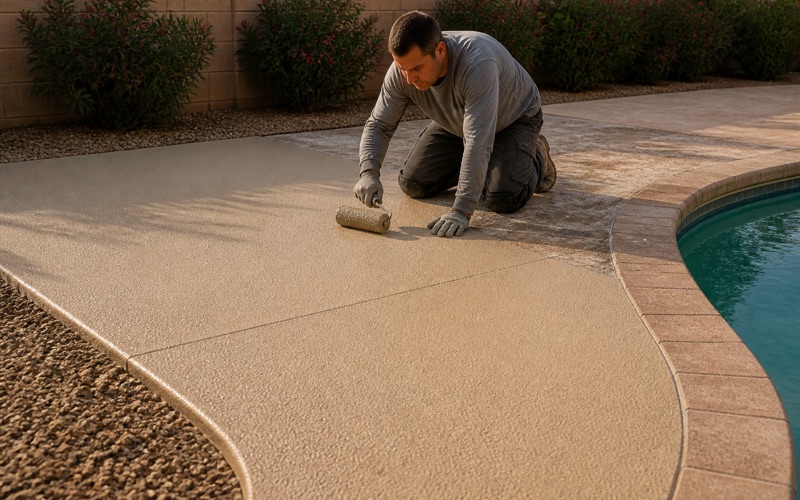
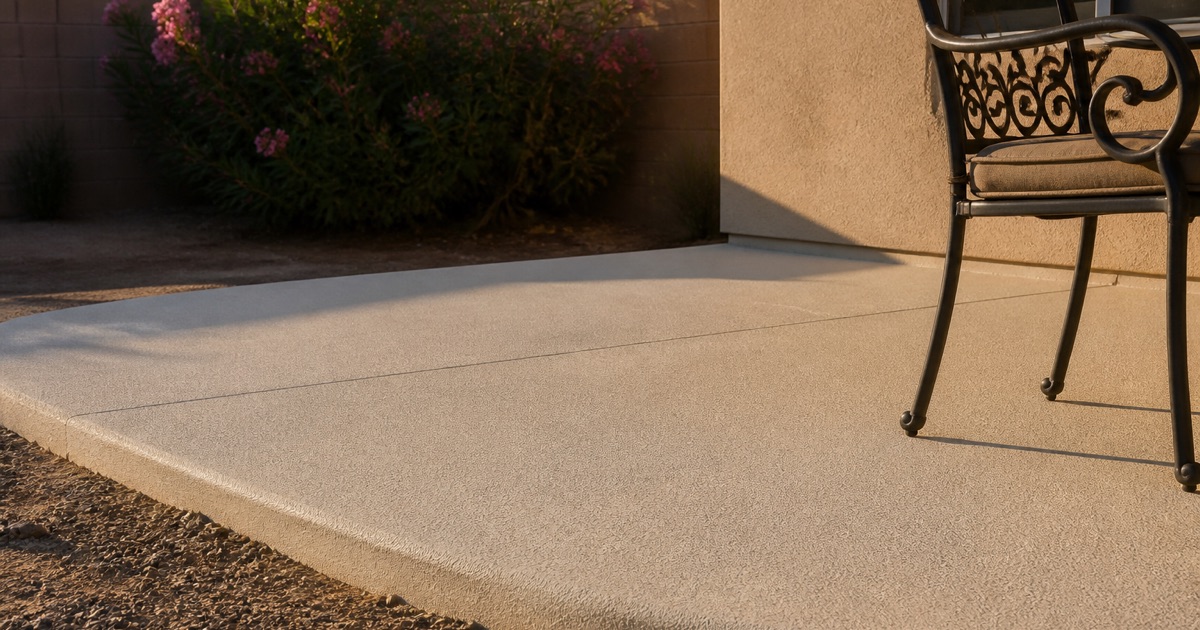
An exterior slab is a different specification from a garage floor, and treating them alike is a common and expensive mistake. Outside there is ultraviolet exposure, thermal cycling, standing water and people walking barefoot. That points at ultraviolet-stable chemistry, usually polyaspartic or polyurea rather than a straight epoxy topcoat, with texture broadcast in for slip resistance.
Surface Temperature, Color and Reflective Pigment
On an inland slab in full sun, color is a comfort decision as much as a design one, because a dark exterior surface gets genuinely too hot to walk on barefoot. Infrared-reflective pigment reduces how much heat a given color absorbs, which widens what is usable on a pool deck or patio. It matters during installation too, since surface temperature drives pot life rather than air temperature.